If you enrolled in health insurance through the ACA Marketplace (Healthcare.gov or your state exchange), there’s a key document heading your way in the fall: your Renewal Notice.
It may not look like much — but it could affect your coverage, costs, and even your tax refund next year.
What is a Marketplace Renewal Notice?
Your Marketplace Renewal Notice outlines:
Changes in your monthly premium
Updates to your deductible or copays
Whether you’ll be automatically renewed in your current plan
Estimated subsidy amounts based on your latest income information
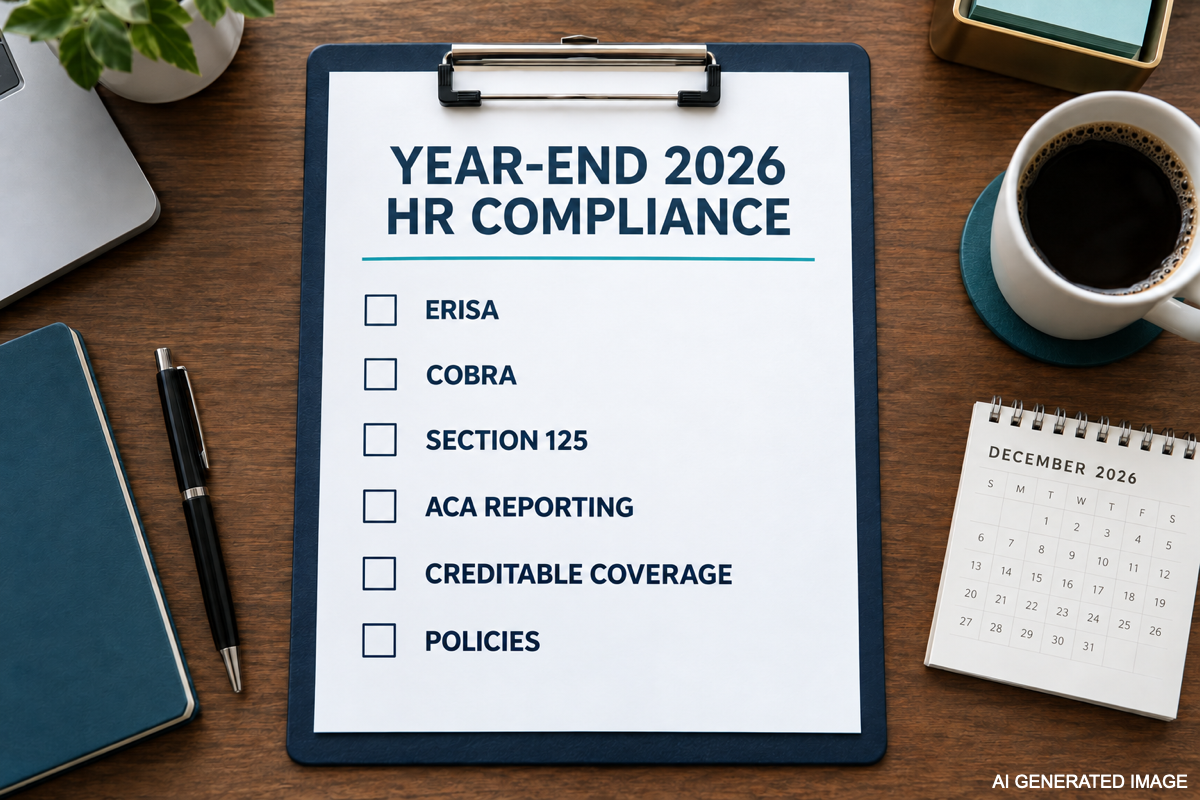
As 2026 comes to a close, HR and benefits administrators face more than holiday planning and budget forecasting. Year-end compliance responsibilities are critical to avoid penalties, ensure smooth operations, and set your business up for a successful new year.
It can be daunting, but we’re here to help, and the practical checklist below is a great place to start. Tackle one section at a time, and reach out to us if you get stuck. We’ll go over ERISA, COBRA, Section 125, ACA reporting, creditable coverage notices, and handbook updates.
ERISA Plan Year-End Tasks
If your company offers health, dental, vision, life or disability benefits, you’re likely subject to the Employee Retirement Income Security Act (ERISA). Before year-end, verify the following:
Wrap Plan Documents and Summary Plan Descriptions
Ensure your plan documents and wrap documents are current. If your plan has changed during the year, you need to update your Summary Plan Description (SPD) to reflect those changes. That can include coverage levels, eligibility rules, or benefits. An outdated SPD creates a compliance risk and can confuse employees about what’s actually covered.